This blog post was researched and authored by Honey Jancauskaite and Nikole Lekaviciute, Fourth Year students at Skibbereen Community School during Social Placement Week, 2023.
Table of Contents
| 1. Preserving Our Community’s Orchard | |
| 2. A Collection of Our Concepts and Knowledge | a) Low Maintenance Fruit Trees b) Addressing Neglect, Safety Hazards, and Aesthetic Concerns c) Design Concepts d) Low Maintenance Companion Plants |
| 3. What can You Do? | A Step-by-Step Guide to bringing life back to the trees |
| 4. References |
1. Preserving Our Community’s Orchard
As a teenager, I have always been passionate about the environment and finding ways to make a positive impact on the world around me. That’s why when I stumbled upon an abandoned community orchard, I knew I had to take action and revive it.
Skibbereen Community Orchard on Gortnaclohy Road close to the traffic lights holds a special place in my heart. It is not just a collection of fruit trees, but a symbol of community spirit, togetherness, and sustainability. It is a space where people can come together to work, learn, and share in the joy of growing fresh, healthy food.
To me, the orchard represents an opportunity to connect with nature and learn about the importance of sustainable agriculture. It is a place where I can learn new skills, meet like-minded individuals, and contribute to my community.
Reviving the orchard is not just about growing fruits and vegetables; it’s about bringing people together and creating a space where everyone is welcome. By working together to restore the orchard, we can build a sense of community and pride in our shared environment.
The orchard also offers a way to address issues around food insecurity and access to fresh produce in our community. By providing fresh, locally grown fruits and vegetables, we can help to improve the health and well-being of those in our community who may not have access to nutritious food.
For me, reviving the orchard is about more than just growing fruit trees; it’s about creating a sustainable future for our community. By working together to care for the orchard and promote sustainable agriculture practices, we can build a brighter, healthier future for ourselves and generations to come.
In conclusion, Skibbereen Community Orchard represents an opportunity to bring people together, promote sustainable agriculture, and address issues of food insecurity in our community. As a teenager, I am excited to be part of this movement, and I look forward to working with others to restore the orchard and create a brighter future for our community.
2. A Collection of Our Concepts and Knowledge
Low Maintenance Fruit Trees*:
| APPLES | Honeycrisp, Liberty, Enterprise, Fuji, GoldRush, Pink Lady |
| PEARS | Harrow Sweet, Moonglow, Ayers |
| PLUMS | Stanley, Methley, Ozark Premier |
| PEACHES | Elberta, Redhaven, Harvester |
| CHERRIES | Black Gold, Hedelfingen, Stella |
*Due to their compact size, we recommend to plant dwarf trees, as they are easy to look after, prune and harvest from. They are also easier to protect from frosts and pests.
Addressing Neglect, Safety Hazards, Aesthetic Concerns:
The Community Orchard is in a state of neglect, with overgrown and unkempt trees, as well as an abundance of weeds that threaten to overrun the orchard. The neglected condition of the orchard is not only an eyesore but also a safety hazard, with fallen branches and unstable trees posing a risk to visitors. Additionally, the stone walls surrounding the orchard are vandalized with graffiti, further adding to the dishevelled appearance of the area. The litter-strewn ground only compounds to the problem, making it clear that the community orchard needs attention and care.
Design Concepts:
- Raised beds: Raised beds can be used to plant fruit trees and other plants in a more organized and visually appealing way. They can also help with soil drainage and make it easier to maintain the orchard.
- Espalier: Espalier is a pruning technique to train fruit trees to grow in a flat, two-dimensional shape against a wall or trellis. This technique can help save space or create a beautiful, ornamental feature.
- Guild planting: Guild panting involves planting a variety of plants that work well together near one another. This can include nitrogen-fixing plants and low maintenance companion plants** comfrey, garlic, chives, yarrow, dill, fennel.
- Orchard paths: Creating paths through the orchard can not only make it easier to navigate and maintain, but also create a welcoming, inviting space for visitors to explore and enjoy.
- Art installations: Art installations like sculptures or murals can add a creative, whimsical touch to the orchard and create a sense of community involvement and pride.
- Education features: Incorporating educational features like signs or information panels can help visitors learn about the orchard’s history, the benefits of sustainable agriculture, and the importance of preserving our natural environment.
- Pollinator-friendly design: Incorporating pollinator-friendly plants and features like bee houses and bird baths can help attract and support a diverse range of pollinators, which is essential for a healthy orchard ecosystem.
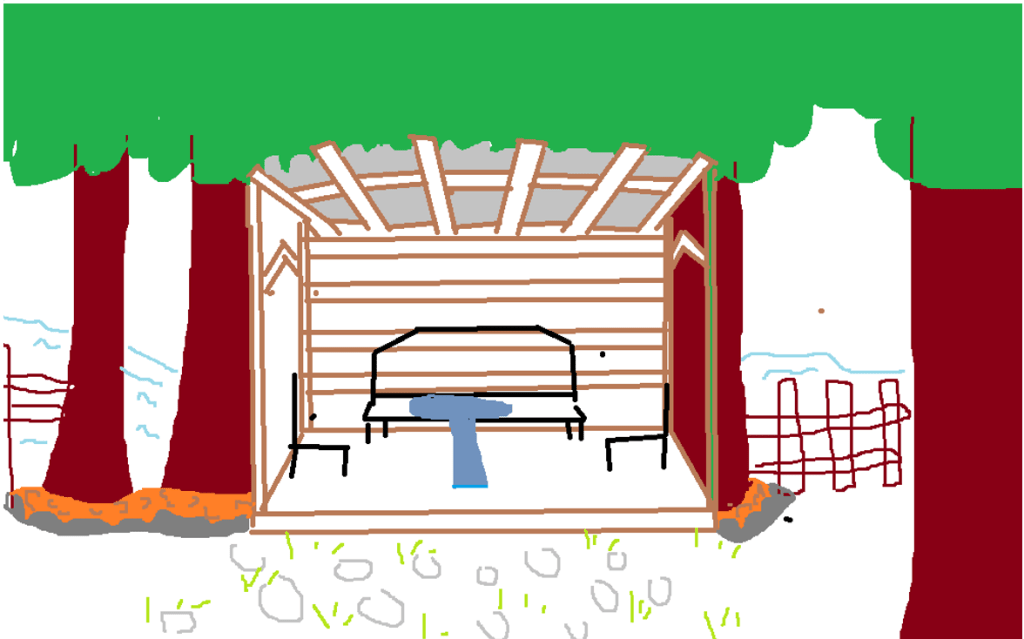
- Seating areas: Providing seating areas like benches or picnic tables can encourage visitors to stay longer and enjoy the orchard’s natural beauty. Seating areas can also be designed to blend in with the natural environment, using stone or wood.
- Mural project: Covering the vandalized stone walls with murals can help deter future graffiti while adding visual interest to the space.
- Recycling and trash bins: Providing recycling and trash bins throughout the orchard can make it easier for visitors to dispose of their waste properly.
** Low Maintenance Companion Plants:
- Comfrey: Comfrey is a deep-rooted perennial plant that accumulates nutrients from the soil and makes them available to other plants. It can be used as a mulch, compost accelerator, and plant nutrient source.
- Garlic: Garlic is a natural pest repellent and can help deter pests like aphids and spider mites from attacking fruit trees.
- Chives: Chives are a low-growing herb that can be used as a natural pest repellent and can help deter pests like aphids from attacking fruit trees.
- Yarrow: Yarrow is a drought-tolerant perennial that can help improve soil health and attract beneficial insects like ladybugs, lacewings, and hoverflies.
- Dill: Dill is a great companion plant for fruit trees because it attracts beneficial insects like ladybugs, lacewings, and hoverflies. It is also a useful source of calcium, which is important for plant growth.
- Fennel: Fennel is another great companion plant for fruit trees because also it attracts beneficial insects. It is also a reliable source of potassium and can be used as a natural insecticide.

3. What Can You Do?
A Step-by-Step Guide to Bringing Life Back to the Trees:
- Assess the condition of the orchard: The first step is to assess the orchard’s condition. Check for any overgrown weeds, fallen branches, diseased trees, and any other potential hazards. Make a list of what needs to be addressed, and estimate the work required.
- the types of trees: Identify the types of fruit trees in the orchard. It is crucial to determine the variety of trees, their ages, and their condition, as this will determine the care they need.
- Clear the area: Clear the area of any weeds or debris that may have accumulated. Ensure that the trees have adequate space and that the soil is cleared of any rocks, dead plants, or debris.
- Prune the trees: Prune the trees to remove any dead or diseased branches, and shape them to encourage healthy growth.
- Plant new trees: If some trees are beyond repair, it’s best to remove them and plant new ones. Choose a variety of fruit trees that are well-suited to the area’s climate.
- Fertilize: Fertilize the trees and add mulch around the base to help retain moisture and suppress weeds.
- Water regularly: Water the trees regularly, especially during the growing season.
- Monitor and maintain: Monitor the orchard regularly for any signs of pests or diseases, and take action as needed. Ensure that the trees are pruned and fertilized regularly to maintain their health.
4. References
- https://blog.firsttunnels.co.uk/
- https://www2.gov.bc.ca/assets/gov/farming-natural-resources-and-industry/agriculture-and-seafood/animal-and-crops/plant-health/beneficial_insects.pdf
- https://natureofhome.com/
- https://en.wikipedia.org/wiki/Main_Page
- https://www.queenerfarm.com/
- https://www.gardenia.net/
 Skibbereen Tidy Towns